Chagas Disease
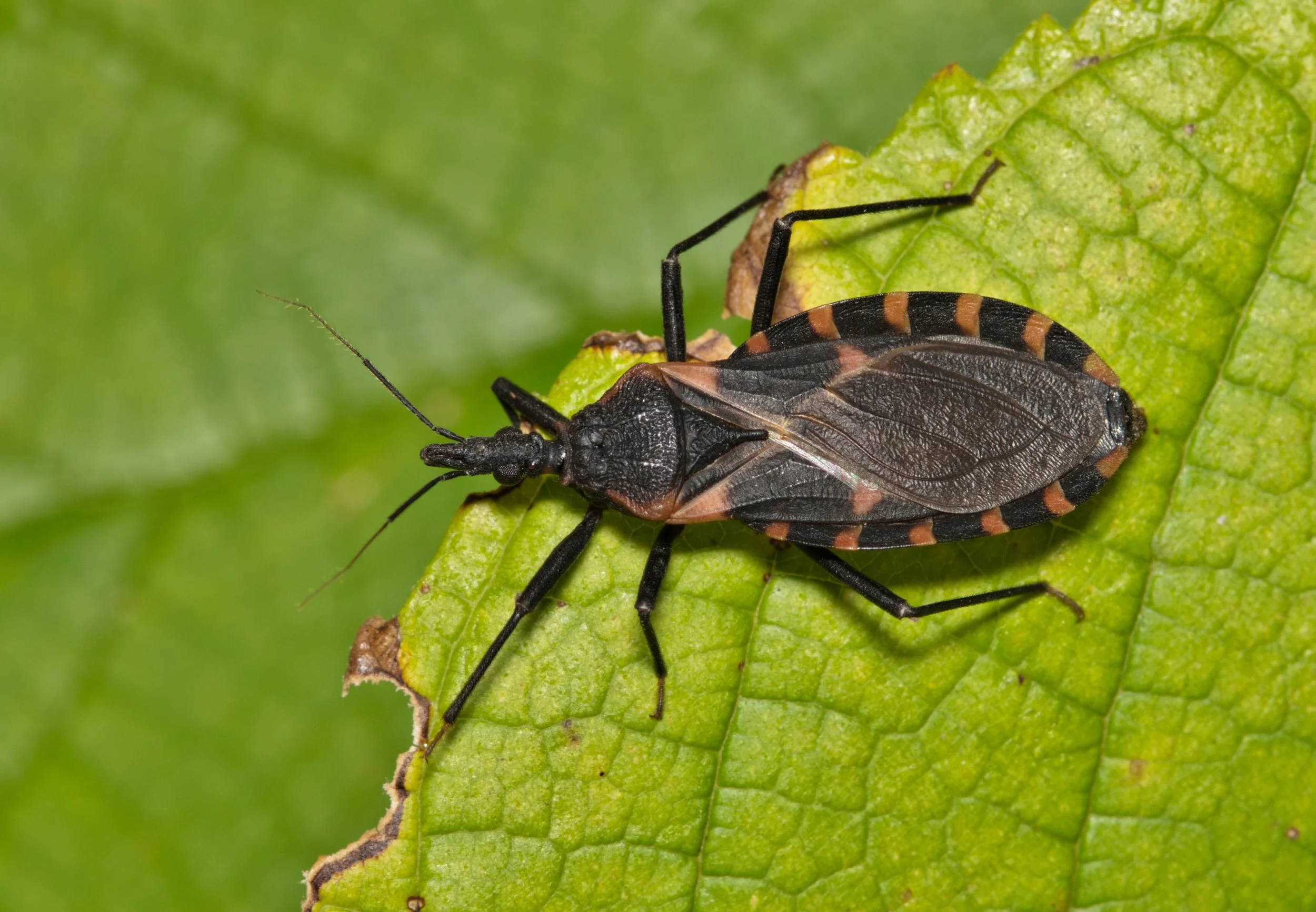
Common names are Kissing bug, Cone nosed bug, and Hualapai tiger.
I don’t care for bears. I don’t really have anything against them but because as a geologist, I have worked mostly in deserts, in both North and South America, where there aren’t bears, I’m not used to being around them. Rattlesnakes don’t bother me. I have run into many in the field. I give them their space and go about my business. The few times that I worked in Montana near the Canadian border, I imagined a grizzly bear behind every tree.
On the other hand, I’ve known geologists who’d always worked in bear country and were comfortable there but imagined a rattlesnake under every rock when working in the desert. I guess it’s human nature to feel more at east around dangers we’re used to and uneasy around unfamiliar ones.
Recently, there was a story in a California newspaper about a case of locally acquired Chagas disease. If you don’t know what Chagas disease is, you’re not alone. The disease is endemic to the rural regions of South America. I first learned about it while working in the deserts of Argentina, where understanding how to avoid the disease was simply part of the job. After a few years of working there, I became accustomed to the danger and thought about it like the dangers of rattlesnakes- something to respect but not fear if you know how to stay safe. But now, this danger has appeared in North America and many people will feel uncomfortable because they don’t know how to avoid it.
Chagas disease is a microscopic parasite carried by infected Cone nosed bugs, also called kissing bugs. In Mohave County, they’re called the “Hualapai tiger” because of the orangish stripes on its wings. It is common around Kingman and surrounding areas. Luckily, the bugs in Mohave County and most of North America haven’t been infected with Chagas disease but that’s changing. We have a new menace.
To be safe around this new menace is to know how the disease is acquired and how to avoid it. For those of us who camp in the desert, knowledge in knowing what to do will help us stay safe and thus, feel comfortable with a new danger. Think of a rattlesnake, only smaller. Avoid and you can enjoy the outdoors safely.
The secret is in knowing how the bug transmits the parasite. The Cone nose bug feeds on the blood of its victims. It prefers to bite them around the eyes and mouth while the victim is sleeping. Because the bug’s saliva has a numbing compound, you don’t feel the bite as it’s feeding but once the bug is done and the numbing compound wears off, there is intense itching at the site of the bite. It’s critical to know that the parasite is not transmitted by the bite.
When the bug feeds on the blood, it becomes engorged and defecates near the bite. The parasite is in the feces on the skin near the bite. The way you get infected is that by scratching the intense itch, you may break the skin, smear the feces on the bite, eyes or mouth and infect yourself.
To stay safe, always use a bug net while sleeping in the field. I used a screen tent, even while staying in some of the more rustic hotels in Latin America, I would pitch my screen tent on top of the bed. If you happen to get bit, DO NOT SCRATCH. Wash the area with soap and water, always stroking away from the bit area, eyes or mouth.
When I returned from one of my trips to Argentina and felt sick, I went to the doctor to be tested for Chagas disease. My doctor had never heard of the disease so he read up on it. As he was reading, he kept saying, “This is serious, let’s hope you don’t have it.” I told him I knew how to avoid it but just wanted to be sure. The tests were negative and I’m still here.
When first working in Argentina, I would sleep with a T-shirt over my head. It was a good thing nobody walked into my room in the morning because I would have looked like Casper the Friendly ghost and would have scared them to death. I have worked in some remote areas with dangerous stuff. I feel safe working around rattlesnakes, Chagas disease, histoplasmosis, schistosomiasis but I still don’t like bears.